

Commercial Alarm Testing
Commercial Alarm Testing Services
Alarms are equipment, systems, and sensors that automatically detect the presence of a fire or intruder. They can also raise the alarm manually through human intervention because someone or something is at risk of social consequences or antisocial behaviour. Included in this category of equipment that we test are products used for controlling access to buildings and theft prevention, CCTV cameras used specifically for security applications, and electronic devices and modules involved with the transmission of an alarm condition, e.g., modems.
A test plan is usually combined with a risk assessment to facilitate a pragmatic approach to monitoring equipment under test, as it may only sometimes be practical to test all functions within a reasonable time frame. The test report is, therefore, a record of test results and measurements and a synopsis of the risk involved if testing deviates from standard procedures or operating conditions of the equipment under test.
Technical standards for this category of equipment take precedence over any other standard, such as ITE, because lives and property could be at risk.
Common items tested include:
- Attack alarms
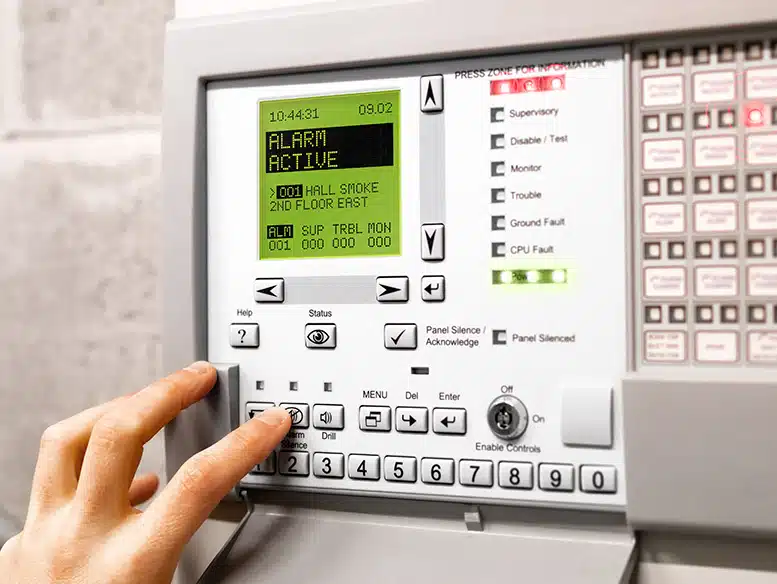
- Fire alarm panels
- Industrial emergency shut down panel
- Security alarm panels
- Sensors, cameras and bell-boxes
- Portable site alarm systems


Standards
We offer a comprehensive range of accredited testing for security, fire and smoke alarms, which can be viewed on our UKAS schedule. Below are the main standards that apply:
- BS EN 50130-4 – Fire and intruder alarms and security- immunity.
- BS EN / IEC 60950-1 – Information Technology.
- BS EN / IEC 60065 – Audio, video and similar equipment.
- BS EN / IEC 62368 – Audio, video, information and communication technology.
- BS EN 62233 – Human exposure to electromagnetic fields.
- BS EN / CISPR 55032 – Conducted and radiated emissions.
- ETSI EN 301 489-3 – EMC and Radio short-range devices.
